Keeping children safe is every parent’s top priority — and one of the hardest parts of the job. Little ones are naturally curious, fearless and quick, which is exactly how they learn about the world. But it also means accidents can happen in seconds, at home or out and about.
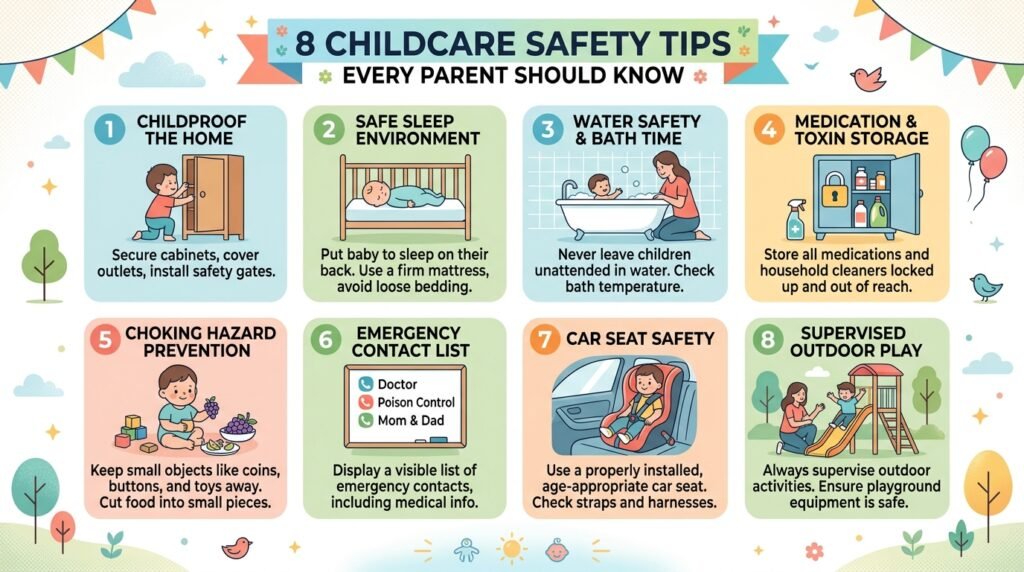
The good news is that most childhood incidents are preventable with a few simple, consistent habits. Alongside teaching your child social and communication skills, building safe routines into daily life gives them the freedom to explore while keeping them protected. Here are eight practical childcare safety tips every parent should know — covering the home, the outdoors and the online world.
Why childcare safety matters
Young children don’t yet understand danger the way adults do. A hot stove, a steep staircase, an open bottle of cleaning fluid — these are just interesting things to a toddler. That’s why safety isn’t about hovering anxiously; it’s about shaping the environment and building good habits so your child can explore confidently and safely.
A safe environment also gives you peace of mind. When you know your home and routines are set up well, you can relax a little, and so can your child. Safety and freedom aren’t opposites — done right, good safety habits give children more room to play and grow, not less.
1. Make your home hazard-free
Start with your home, where children spend most of their time. Walk through each room at your child’s eye level and look for risks: sharp corners on furniture, small objects that could be swallowed, trailing cables, and unstable items that could topple.
Cover unused plug sockets, secure heavy furniture and TVs to the wall so they can’t tip over, and keep medicines well out of reach. Tidy away anything sharp or small. A well-organised, clutter-free home isn’t just tidier — it removes dozens of small hazards before they become accidents.
2. Strengthen your home security
Keeping children safe also means controlling who and what comes into your home. Reliable door and window locks, a working security system, and a video doorbell or camera all help you keep an eye on comings and goings, adding a layer of physical security from the outside world.
Get into simple habits too: keep external doors locked, teach older children not to open the door to strangers, and make sure windows — especially upstairs — have safety restrictors so they can’t be opened wide enough for a child to climb or fall through.
3. Prevent slips, trips and falls
Falls are one of the most common causes of injury for young children, so they’re worth tackling head-on. Fit stair gates at the top and bottom of staircases to stop little ones climbing unsupervised, and keep stairs completely clear of toys, shoes and clutter.
Use non-slip mats in the bathroom, kitchen and on any smooth floors, and wipe up spills straight away. For toddlers just finding their feet, these small steps dramatically cut the risk of a nasty tumble.
4. Lock away household dangers
Some of the most serious risks in any home are hidden in plain sight. Cleaning products, medicines, and other chemicals or poisonous substances should always be locked away or kept high up, well out of a child’s reach — never under the sink where small hands can find them.
Take extra care around water and heat. Never leave a young child unattended near a bath, paddling pool or any water, even for a moment, and supervise closely in the kitchen. A stove guard helps protect against burns, and turning pot handles inwards keeps them out of grabbing range.
5. Supervise outdoor play
Outdoor play is wonderful for a child’s growth, confidence and social development — but it comes with its own risks. Always supervise younger children outside, check that gardens are securely fenced, and make sure play equipment is stable and age-appropriate.
As children grow, teach them the basics of staying safe outdoors: how to cross the road safely, to stay where you can see them, and simple rules about strangers. Outdoor freedom and safety go hand in hand when children understand a few clear boundaries.
6. Teach safety through everyday conversation
Some of the best protection isn’t physical at all — it’s what your child knows. Teach children, in age-appropriate ways, how to keep themselves safe: how to call emergency services and what to say, the difference between “good touch” and “bad touch,” and who they can turn to if something feels wrong.
Keep these conversations calm, clear and consistent rather than frightening. Children who understand safety, and who know they can always come to you, are far better equipped to recognise danger and ask for help. This kind of open communication is one of the most powerful safety tools you have.
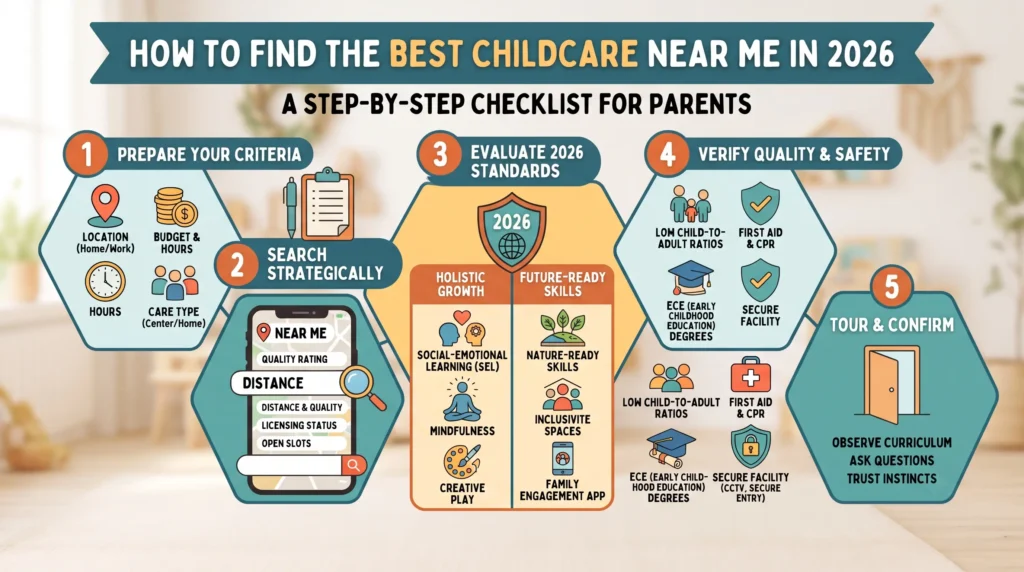
7. Choose safe, trusted childcare
At some point, most parents need childcare — and choosing the right care is one of the most important safety decisions you’ll make. Whether it’s a nursery, a childminder or in-home childcare, take the time to check it properly.
Visit the setting, look closely at their safety measures and supervision, and ask caregivers directly about their training, qualifications and DBS checks. A trustworthy provider will welcome these questions, not dodge them. The reassurance of knowing your child is in safe, capable hands is worth every minute of that homework — it’s the same trust that underpins all our home care services.
8. Set up good digital safety habits
In today’s world, keeping children safe means protecting them online as well as offline. Screens and devices are part of modern childhood, but young children are easily influenced and not yet ready to navigate the online world alone.
Set clear boundaries: agree screen-time limits, keep devices in shared family spaces, and use parental controls to block harmful or inappropriate content. Encourage positive, educational use of technology, and keep talking to your child about what they see online. Healthy digital habits set early protect both their safety and their developing mindset.
A quick word on first aid
Even in the safest home, accidents occasionally happen — so being prepared makes all the difference. Keep a well-stocked first aid kit somewhere accessible (but out of children’s reach), and learn the basics of paediatric first aid, including what to do if a child chokes, burns themselves or has a fall. Many local organisations run short courses for parents, and even a couple of hours of training can give you the confidence to stay calm and act quickly in an emergency. Keep important numbers — your GP, NHS 111, and emergency services — somewhere easy to find, and make sure any childcare provider or family member who looks after your child knows them too.
Building a culture of safety at home
The most effective safety isn’t a one-off check — it’s a habit woven into daily life. Children learn by watching, so when safe behaviour is simply “how we do things” in your home, your child absorbs it naturally. Buckling up every time, washing hands, holding the handrail on stairs, asking before opening the door: these small, consistent routines build instincts that protect your child for years.
It’s also worth reviewing your home and habits as your child grows. The hazards that matter for a crawling baby are different from those for an adventurous five-year-old. A quick refresh every few months keeps your safety measures matched to your child’s stage — and keeps everyone relaxed enough to enjoy family life.
Frequently asked questions
What are the most important childcare safety tips at home?
The essentials are removing hazards, locking away medicines and chemicals, fitting stair gates, preventing falls with non-slip mats, and never leaving young children unattended near water or in the kitchen. Together these prevent the most common childhood accidents.
At what age should I start teaching my child about safety?
You can start very early in simple, age-appropriate ways — naming hot things as “ouch,” holding hands near roads, and gradually building up to road safety, good-touch/bad-touch and how to get help. Keep it calm and consistent rather than frightening.
How do I know if a childcare provider is safe?
Visit the setting, observe supervision and safety measures, and ask directly about staff training, qualifications and DBS checks. A trustworthy provider will answer openly and welcome your questions.
How can I keep my child safe online?
Set screen-time limits, keep devices in shared spaces, use parental controls to block harmful content, and talk regularly with your child about what they see online. Early, healthy digital habits protect their safety and wellbeing.
How often should I review my home for safety?
Every few months, and whenever your child reaches a new stage — crawling, walking, climbing. Each stage brings new risks, so refreshing your safety checks keeps your home matched to your child’s abilities.
Talk to Black Horse Care
Every child deserves to grow up safe, secure and free to explore. If you’re looking for trusted, attentive in-home childcare across Barking, East London and Essex, we’d love to help. Call +44 333 004 0106 or book a free consultation to talk through your family’s needs.