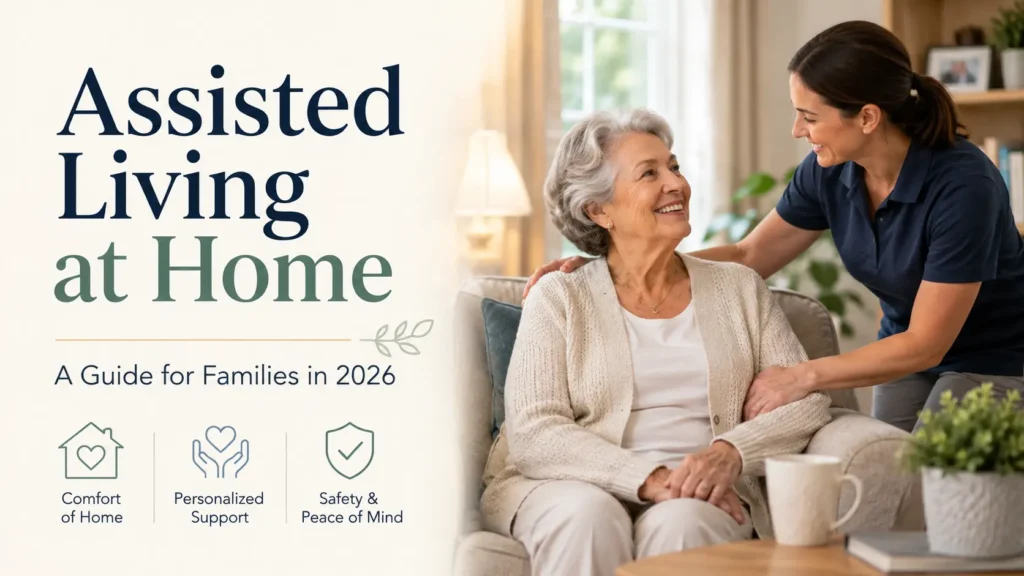
When an elderly parent starts needing a little more help, many families assume the only option is moving them into an assisted living facility. But there’s another way. Assisted living at home lets your loved one get the day-to-day support they need while staying in the place they know and love best: their own home.
For a lot of families, this is the answer they didn’t know they were looking for. It combines genuine, practical help with the comfort, independence and familiarity of home. In this guide, we’ll explain exactly what assisted living at home involves, who it suits, and how to arrange it.
What is assisted living at home?
Assisted living at home means bringing the kind of support you’d find in an assisted living facility directly into a person’s own house. Rather than moving into a residential setting, your loved one stays put, and a trained carer provides help with the tasks of daily life.
The level of support is completely flexible. It might be a carer visiting for a couple of hours a day, or someone living in the home to provide round-the-clock help. The point is that the care is shaped around the person and their home, not the other way around.
What kind of support does it include?
Assisted living at home covers the everyday things that can become harder with age, illness or reduced mobility. Depending on your loved one’s needs, this may include:
- Help with washing, dressing and personal care
- Medication reminders and support
- Preparing meals and help with eating
- Light housekeeping and laundry
- Help getting around the home safely
- Companionship and social interaction
- Support getting to appointments or out and about
- Overnight support where needed
Because everyone’s needs are different, a good provider will build a personalised plan rather than offering a fixed package.
Assisted living at home vs a residential facility
The biggest difference is simple: with assisted living at home, your loved one doesn’t have to leave their home. That single fact changes everything.
In a residential facility, a person adapts to a new environment, new routines and shared staff attention. With assisted living at home, the support adapts to them. They keep their own bedroom, their own routine, their pets, their garden, their neighbours and their independence, while still getting the help they need.
It’s also often more personal. In a facility, carers are shared among many residents. At home, the support is one-to-one, focused entirely on your loved one.
Who is assisted living at home right for?
Assisted living at home can suit a wide range of people, including those who:
- Are managing but finding daily tasks harder than before
- Want to stay independent in their own home
- Are recovering from illness, surgery or a hospital stay
- Are living with a long-term condition or early-stage dementia
- Feel isolated and would benefit from companionship
- Have family who can’t always be there and want reassurance
If your loved one values their independence but needs a helping hand, this is often the ideal middle ground between managing alone and moving into care.
The benefits of staying in your own home
There’s a growing recognition that, for most people, home is where they’re happiest and healthiest. The benefits of assisted living at home include:
- Familiarity and comfort, which is especially important for people with dementia
- Independence and control over daily life
- One-to-one, personalised support
- Staying close to family, friends and community
- Flexibility to increase or adjust support as needs change
- Dignity, in surroundings that feel like their own
How to arrange assisted living at home
Getting started is more straightforward than many families expect:
- Get in touch and tell us what’s happening. There’s no pressure and no obligation.
- Free assessment. We visit to understand your loved one’s needs, routine and wishes.
- A personalised care plan is created, and a suitable carer matched to your loved one.
- Support begins, and we stay in touch to adjust the plan as needs change.
Frequently asked questions
What does assisted living at home mean?
Assisted living at home means receiving support with daily living, such as personal care, medication, meals and companionship, in your own home rather than in a residential facility. It lets a person stay independent and comfortable while getting the help they need.
Is assisted living at home cheaper than a care home?
It can be, depending on how much support is needed. For those needing only a few hours of help a day, home care is often more cost-effective, and it allows the person to stay in familiar surroundings. A free assessment is the best way to compare.
What’s the difference between assisted living and home care?
They’re very similar. “Assisted living at home” describes bringing assisted-living-style support into a person’s own home through home care services, rather than moving them into an assisted living facility.
Can assisted living at home support someone with dementia?
Yes. Familiar surroundings are especially valuable for people with dementia, and trained carers can provide the routine, patience and support that help someone with dementia feel safe and settled at home.
How much support can I get at home?
As much or as little as needed, from a short daily visit to full live-in care. The support is flexible and can be adjusted as your loved one’s needs change over time.
Bring assisted living into your loved one’s home
Your loved one shouldn’t have to leave the home they love to get the support they need. Assisted living at home offers the best of both: genuine, professional help and the comfort of familiar surroundings.
At Black Horse Care, we provide compassionate assisted living at home across Barking, Greater London and Essex, from a few hours of visiting care a day to full live-in care. Call us on +44 333 004 0106 or book a free care assessment to talk through what would suit your family.
Black Horse Care — your happiness is our goal.