Childcare costs can take a large part of a family’s income. Nursery fees, childminders, after-school care and holiday clubs quickly add up. Tax-Free Childcare is a UK government scheme that helps eligible working families reduce these costs.
It does not make childcare completely free or refund income tax. Parents pay money into an online account, the government adds a top-up, and the balance pays an approved provider.
This guide explains eligibility, payments, approved providers, and how to use the tax-free childcare login safely.
What Is Tax-Free Childcare?
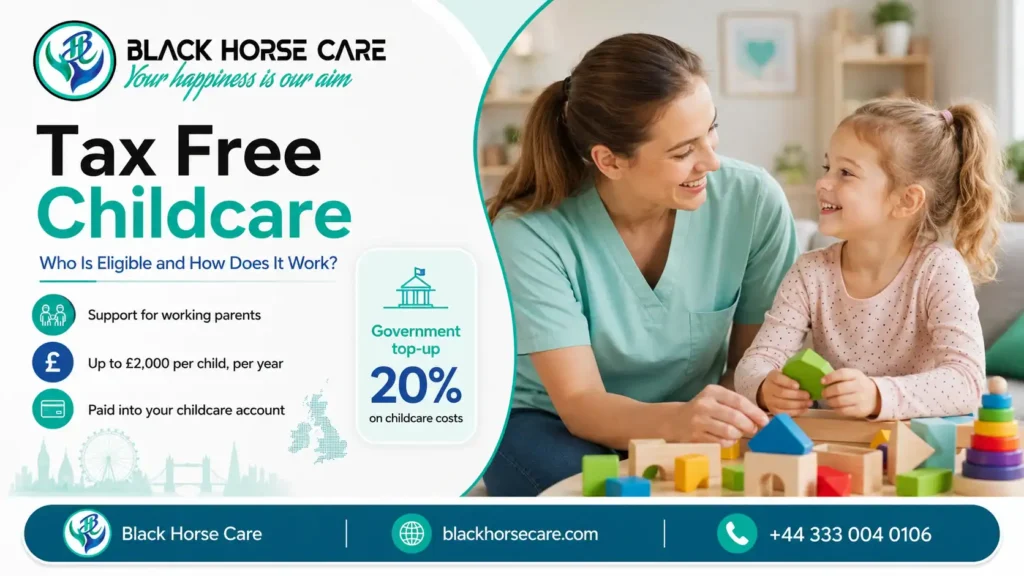
The UK tax-free childcare scheme gives parents support towards registered childcare. For every £8 you pay into your tax-free childcare account, the government adds £2. This means you pay 80% of the childcare cost, and the government pays the remaining 20%, subject to official limits.
For example, imagine your nursery bill is £750. You pay £600 into the account, the government adds £150, and you send the full £750 to the nursery. The maximum government contribution is normally £500 every three months for each eligible child, up to £2,000 per year. For an eligible disabled child, the maximum rises to £1,000 every three months, up to £4,000 per year.
You can pay regularly, add money before a bill, or ask another person to contribute. The government top-up cannot exceed the quarterly limit.
Who Is Eligible for Tax-Free Childcare?
HM Revenue and Customs considers:
- Your child’s age and circumstances
- Whether the child normally lives with you
- Your employment or self-employment
- Your partner’s work, when applicable
- Your expected earnings
- Your adjusted net income
- Your immigration status
- Any childcare support you already receive
Couples normally need to meet them individually, even when only one parent handles the tax-free childcare account.
Child Age and Responsibility Rules
Your child must normally live with you, and you must be responsible for them. You cannot usually claim Tax-Free Childcare for a foster child because different support arrangements may apply.
Most children can stay until 1 September after they turn eleven. A qualifying disabled youngster can be covered until the 1st September following their sixteenth birthday. Qualifying criteria include being certified as blind or seriously sight-impaired, or receiving some types of disability compensation.
Separated parents should agree who will manage the account; HMRC may decide if they cannot agree.
Work Rules for Parents
You can usually qualify when you are employed, self-employed or earning through both types of work. Annual leave and sick leave may also count as qualifying circumstances.
Parents may also qualify during maternity, paternity, adoption or shared parental leave, or while receiving statutory neonatal care pay. Application timing may depend on when you return to work.
Part-time workers, freelancers, seasonal workers and people on zero-hours contracts may qualify if their expected earnings are high enough.
What If One Partner Is Not Working?
Both partners normally need to work. An exception may apply when one works and the other receives a qualifying benefit because of illness, disability or caring duties.
Relevant support may include:
- Disability Benefits
- Severe Disability Allowance
- Carer’s Allowance
- Carer Support Payment (Scotland)
- Contribution-based ESA
- Some National Insurance credits for limited capability for work
The working partner must still meet the earnings test, and both adults must satisfy the other conditions.
Minimum Earnings Requirement
You and your partner must each normally expect to earn at least the equivalent of 16 hours per week at the applicable National Minimum Wage or National Living Wage, averaged over the next three months.
For current applications, the official minimum expected earnings over three months are:
- £2,643.68 before tax for someone aged 21 or over
- £2,256.80 before tax for someone aged 18 to 20
- £1,664 before tax for someone under 18 or an apprentice
These estimates are based on an average of 16 hours per week; you don’t need to work exactly 16 hours each week. Irregular workers can qualify if average expected wages are high enough. If you are paid irregularly, HMRC may allow you to use an annual average. Keep backing up your records.
Maximum Income Limit
You or your partner cannot claim if you think your adjusted net income will be over £100,000 in the current tax year. It is per adult, not a household total.
If two parents earn £70,000 each, they may be eligible under this requirement, but the household normally fails if one parent earns £105,000.
Adjusted net income can include salary, bonuses, self-employed profits, foreign income and other taxable income. Pension contributions and Gift Aid may affect the calculation, so check carefully if you are near the threshold.
Can Self-Employed Parents Apply?
Yes. The UK tax-free childcare scheme is available to eligible self-employed parents, including sole traders and people who combine employment with a business.
If you started your business less than 12 months ago, the normal minimum earnings requirement may not apply during that start-up period. You must still meet the child, income, immigration and other eligibility rules.
Use a reasonable profit forecast and keep records. Dividends, interest, pension income and property income do not count towards minimum work earnings, although they may affect adjusted net income.
Immigration Status and National Insurance
You normally need a National Insurance number and an eligible immigration status. You may qualify if you have British or Irish citizenship, settled or pre-settled status, a pending qualifying status application or permission to access public funds.
Your partner also needs a National Insurance number. Check your eVisa or residence documents if public fund restrictions may apply.
Tax-Free Childcare and Universal Credit
You cannot receive tax-free childcare and Universal Credit childcare support at the same time. Universal Credit can cover up to 85% of eligible childcare costs for qualifying claimants, so it may be more valuable for some lower-income families.
Before leaving Universal Credit, use the official childcare calculator and compare your childcare bill, number of children, household income, and wider award. Get advice before switching because ending one scheme may reduce your overall support.
Can It Be Combined With Other Schemes?
Tax-free childcare cannot be used alongside employer childcare vouchers. Voucher schemes closed to new applicants in October 2018, but existing members may still use them. Parents who choose tax-free childcare must normally tell their employer and leave the voucher arrangement within three months of their declaration.
You may use Tax-Free Childcare alongside eligible funded hours. These may cover standard sessions while your account pays for extra nursery time or wraparound care. Rules vary across the UK.
What Childcare Can You Pay For?
Your provider must be approved or registered and signed up to receive payments through the scheme. Tax-free childcare may be used for:
- Registered nurseries
- Registered childminders
- Registered nannies
- Breakfast clubs
- Clubs after school
- Holiday clubs.
- Play schemes
- Registered school-based wraparound care
- Some home-care firms licensed
- Nursery Deposits & Retainers
- Childcare, including meals or excursions included in the overall fee
It cannot normally pay for compulsory education, school uniforms, ordinary school lunches, private lessons during the school day or school trips that form part of normal education.
Can You Pay a Relative?
A relative such as a grandparent may sometimes be paid, but they generally need to be a registered and approved childcare provider. The care must usually take place outside the child’s home.
You cannot normally pay the child’s parent, stepparent, your partner, anyone with parental responsibility or a foster parent providing ordinary care. Check the rules for your UK nation.

How to Find Childcare Near Me
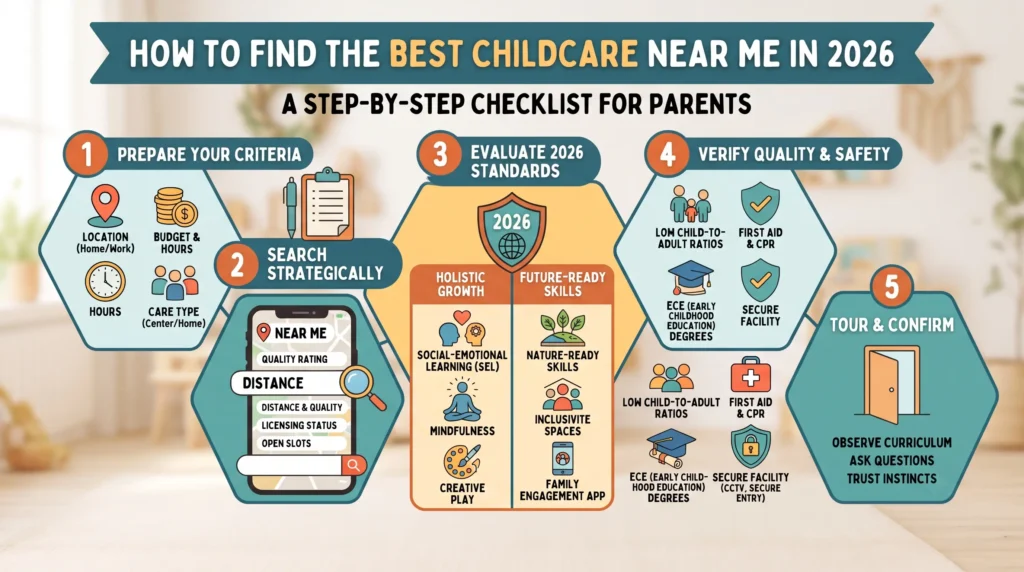
Many parents begin by searching “childcare near me” for nurseries, childminders and clubs in their area. A nearby provider is not automatically eligible, so confirm that it is registered and accepts payments from the scheme.
When comparing childcare near me results, check registration, opening hours, fees, extras and whether tax-free childcare is accepted.
Search inside your account using the provider’s name, postcode or registration details. Ask before paying a deposit because an approved provider may still need to join the scheme.
How to Apply for Tax-Free Childcare
Apply through the official GOV.UK childcare service. You may need:
- Your National Insurance number
- Your partner’s National Insurance number
- Employment and expected income details
- Your child’s information
- Your Unique Taxpayer Reference if self-employed
- Details of benefits or existing childcare support
One parent manages the application, but all eligible children can be added and receive separate limits. After approval, add your provider, deposit your share, wait for the top-up, and send payment before the deadline.
Using the Tax-Free Childcare Login
Always access the tax-free childcare login through GOV.UK. Avoid unexpected email or text links asking for account information.
The tax-free childcare login allows you to:
- Pay money into your account
- View government top-ups
- Add or change a provider
- Send childcare payments
- Manage each child separately
- Check your reconfirmation date
- Update family, work or income details
Choose the correct child, provider and reference so the payment matches your invoice. The official service also shows your next confirmation date.
Reconfirm Eligibility Every Three Months
You have to check that your information is still correct every 3 months. Check your employment, predicted wages, partner circumstances, adjusted net income, address, and child details.
HMRC normally sends reminders, but reconfirmation is your responsibility. Missing the deadline can stop top-ups. Use your tax-free childcare login early and report important work, income, relationship, benefit, or provider changes.
Common Mistakes to Avoid
Parents often lose time or miss support because they:
- Imagine the plan makes childcare free
- Use an unsigned provider. Miss the three-month reconfirmation
- Enter adjusted net profit in place of salary
- Delete a partner’s situation
- Deposit money into the wrong child’s bank account
- Pay in advance of receiving the top-up
- Incompatible childcare support take
- Wait for the invoice due date.
- Use non-official sign-in page
Keep invoices and payment records to help resolve account problems.
Is tax-free childcare worth it?
Tax-free childcare can be valuable when you regularly pay an approved nursery, childminder, breakfast club, after-school club or holiday provider. Families with several eligible children may benefit because each child has a separate annual limit.
Sometimes this isn’t the best solution. Compare funded hours, vouchers and Universal Credit in terms of costs, predictable income and eligibility for both partners.
Quick Eligibility Checklist
You may qualify when:
- Your child normally lives with you
- Your child meets the age requirements
- You are responsible for the child
- You and your partner meet the work rules
- Each adult meets the minimum earnings test
- Neither adult exceeds the £100,000 income limit
- Your immigration status is eligible
- You use an approved provider
- You are not claiming incompatible support
Frequently Asked Questions
Is Tax-Free Childcare a Tax Refund?
No. It is a government top-up paid into an online account, not a refund of income tax.
Can Grandparents Add Money?
Yes. Grandparents, relatives or employers may contribute, but the government top-up remains limited for each child.
Can I Use It for Holiday Clubs?
Yes, if the club is approved and signed up to receive payments through the scheme.
Can I Withdraw Unused Money?
You can normally withdraw your own unused contribution. The matching government amount is removed.
Does It Affect Child Benefit?
No. Using tax-free childcare does not by itself stop an eligible family from receiving child benefit.
What If My Circumstances Change?
Update the account promptly because work, income, relationship, benefit, or childcare changes may affect eligibility.
Final Thoughts
Tax-Free Childcare helps eligible working families reduce approved childcare costs. For every £8 paid into the account, the government adds £2, up to £2,000 per child each year or £4,000 for an eligible disabled child.
Check the age, work, income and immigration rules before applying. Confirm your provider accepts the scheme, compare other support and reconfirm every three months.
A tax-free childcare account can make nursery, childminder and wraparound costs easier to manage. Keep details accurate, pay early and use the official tax-free childcare login.
If you’re looking for trusted, flexible in-home childcare that fits around your family, we’re here to help. Book a free consultation to talk through your needs.