

When a loved one needs more support than occasional visits can provide, many families face a difficult choice: a residential care home, or a way to stay safely at home. For a growing number of people, a live-in caregiver offers the best of both worlds — full-time, professional support without leaving the home they love.
But if you’ve never arranged it before, live-in care can feel like a step into the unknown. What does a live-in carer actually do all day? How does it work practically? And what should you expect when one moves in? This guide answers those questions clearly, so you can decide whether live-in care is right for your family.
What is a live-in carer?
A live-in carer is a trained professional who lives in the home of the person they support, providing around-the-clock care and companionship. Rather than visiting for short periods, they’re there throughout the day and night — ready to help whenever needed, while still allowing the person to keep their independence, routines and privacy.
It’s a model built around one simple idea: that most people, given the choice, would rather stay in their own home, surrounded by their own memories and belongings, than move into residential care. A live-in carer makes that possible — safely. You can read more on our live-in care page.
A good live-in carer does far more than help with practical tasks. They support health and wellbeing, encourage social contact and hobbies, and become a trusted, familiar presence. People feel respected by a carer who listens well, understands their preferences and treats them with genuine dignity.
What a live-in carer does each day
No two days are identical, because care is shaped around the individual. But a typical day involves a blend of personal care, health support, household help and companionship. Here’s what that looks like in practice.
Personal care and daily support
Live-in carers help with personal care and hygiene — washing, bathing, showering, dressing, hair care and dental care — always with sensitivity and respect for the person’s dignity. They learn each person’s preferences and routines, helping in the way that feels most comfortable, and adapting as needs change through the day.
For many people, it’s reassuring to know the same familiar carer is there to help, rather than a rotating series of different faces. That continuity builds trust and makes personal care feel far less daunting.
Managing medication and health
Keeping on top of medication can be one of the hardest parts of living with a long-term condition. A live-in carer helps make sure medication is taken correctly and on time, and keeps an eye on day-to-day health — noticing early if something changes, such as a loss of appetite, a new ache, or a dip in mood. That early awareness can prevent small problems from becoming serious ones, and gives families real peace of mind.
Supporting mobility and physical health
Because a live-in carer is there around the clock, they can help with moving safely at any time of day — getting in and out of bed, moving from bed to chair, walking around the home, and gentle exercise to keep muscles and joints working. This constant availability significantly reduces the risk of falls, which are one of the biggest dangers for older people living alone. Maintaining safe movement also helps people keep their independence and confidence for longer.
Household tasks and meals
A live-in carer helps keep the home running smoothly — light cleaning, laundry, shopping and tidying — so the person isn’t struggling with chores or living in a home that’s become hard to manage. They also prepare nutritious, enjoyable meals suited to each person’s tastes and dietary needs, and make sure they’re eating and drinking well. Good nutrition matters enormously for health, energy and recovery, and it’s easy to overlook when someone is living alone.
Companionship and emotional support
Perhaps the most underrated part of the role: companionship. Loneliness is a genuine health risk for older people, linked to depression, anxiety and physical decline. A live-in carer is a constant, friendly presence — someone to share meals and conversation with, to enjoy a hobby alongside, or simply to sit with. This emotional support lifts mood and brings stability, and we explore it further in the importance of companionship in live-in care.
Supporting social life and hobbies
A good live-in carer actively encourages a person’s interests and social connections — helping them stay in touch with family and friends, get to appointments and clubs, keep up hobbies, and stay part of their community. Care isn’t only about safety; it’s about helping someone keep living a full, engaged life.
How does live-in care work practically?
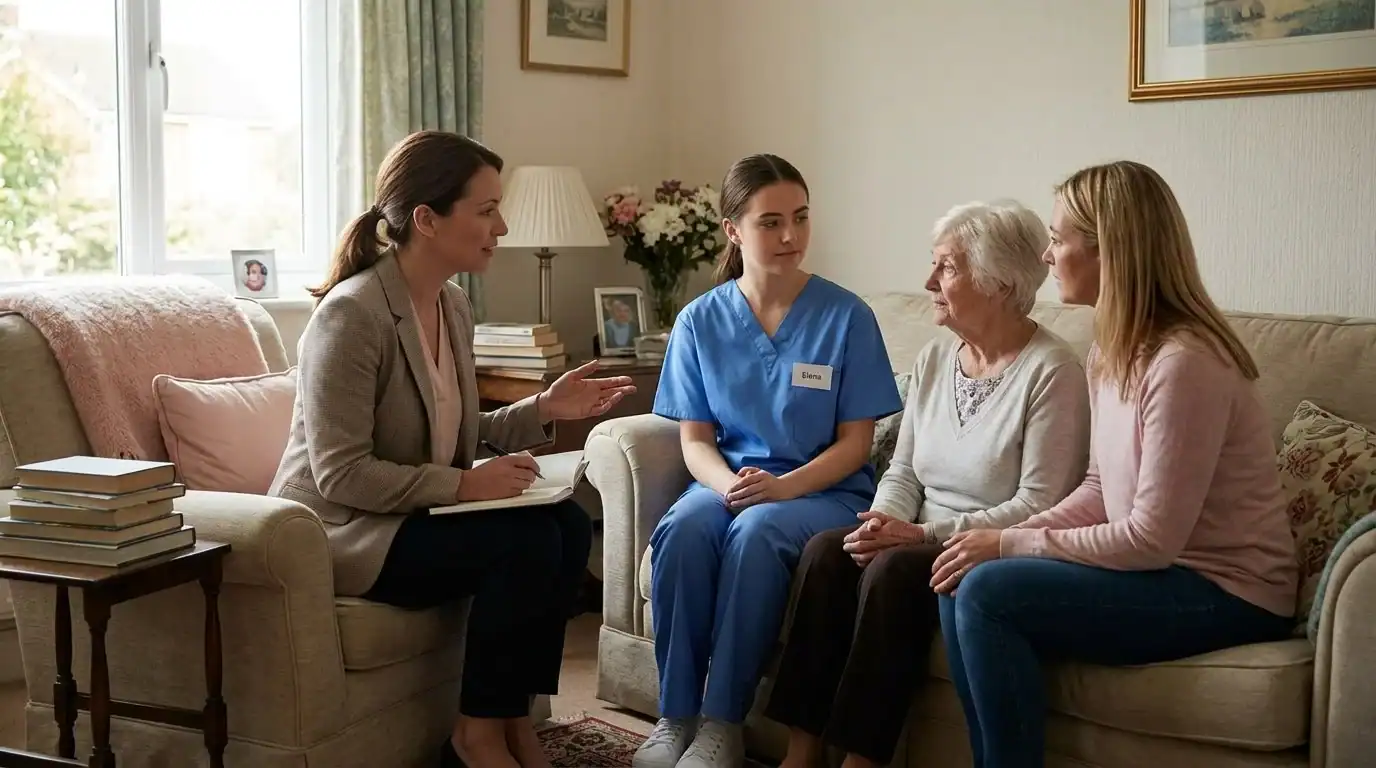
Understanding the practical side helps families feel confident about the arrangement.
The carer needs their own room. A live-in carer requires a private, comfortable bedroom in the home, and access to basic facilities. This is their space to rest and take their own time off-duty.
Carers take breaks. A live-in carer isn’t working 24 hours without pause. They have agreed daily break time (usually a couple of hours) and need proper rest overnight. For people who need significant help during the night, a provider may recommend additional overnight support so the live-in carer can rest — you can read about this on our overnight care page.
Care is planned and reviewed. It starts with a detailed assessment of the person’s needs, health and preferences, which becomes a personalised care plan. That plan is reviewed regularly and adjusted as needs change — so the support always fits.
Matching matters. Living with someone is personal, so a good provider takes care to match each person with a carer they feel comfortable and compatible with — considering not just care needs but personality, interests and routines.
When is live-in care the right choice?
Live-in care can be a good fit when:
- someone needs more support than visiting care can comfortably provide
- the family wants to avoid the upheaval of a residential care home
- there are safety concerns about a person living alone, such as falls or wandering
- a person is living with a condition like dementia and benefits from familiar surroundings and a consistent carer
- a couple want to stay together at home, even when one or both need care
- family carers are exhausted and need reliable, professional support
If you’re still weighing your options, our guide to the difference between domiciliary care and home care compares live-in care with visiting support.
What to expect when arranging a live-in caregiver
Care should always begin with the person, not a package. At Black Horse Care, we start with a free assessment to understand the individual’s needs, health, routines and preferences. From there, we build a personalised plan and carefully match them with a trained carer they feel at ease with. Once care begins, we stay in close contact with the family and review the plan regularly, adjusting it as needs change.
In the early days, it’s natural for there to be an adjustment period as everyone settles into the new arrangement. A good carer is patient and sensitive during this time, and most families find that trust and routine build quickly.
Frequently asked questions
What does a live-in carer do at night? A live-in carer is on hand overnight to help if needed — for example, with toileting or reassurance — while still getting their own rest. If someone needs frequent help through the night, a provider may suggest dedicated overnight care so the live-in carer can sleep and stay at their best during the day.
Does a live-in carer need their own room? Yes. A live-in carer needs a private bedroom and access to basic facilities. This gives them somewhere to rest during their off-duty time.
How many hours does a live-in carer work? A live-in carer provides support throughout the day and is on hand overnight, but they take agreed daily break time and need proper rest. They’re a constant presence, not working non-stop.
Is live-in care cheaper than a care home? For couples, or for people with higher needs, live-in care can be comparable to or more cost-effective than residential care — and it keeps the person in their own home. Costs depend on the level of support needed; a free assessment gives you an accurate picture.
Can a live-in carer support someone with dementia? Yes. Many people with dementia benefit greatly from staying in familiar surroundings with a consistent, trained carer. Our dementia care is designed around exactly this.
How do you choose the right carer for my loved one? We match each person with a carer based on care needs, personality, interests and routines — because compatibility matters as much as competence when someone is living in your home.