
“Domiciliary care” and “home care” are often used to mean the same thing — care delivered in your own home — but there are some useful differences worth understanding before you choose. This guide explains both in plain terms so you can decide what fits your family.
What is domiciliary care?
Domiciliary care (often shortened to “dom care”) means trained carers visiting you at home to support your daily life – helping you stay independent, comfortable and safe in familiar surroundings.
It’s built around flexibility. You can arrange visits at set times throughout the day or have support around the clock and shape the help around exactly what you need. You can read more on our domiciliary care page.
Who needs domiciliary care?
Domiciliary care suits people facing a range of situations — recovering after surgery, living with a long-term condition, managing a disability, or simply needing a hand with daily life as they get older. Care is shaped around each person’s own plan and routine.
What domiciliary care includes
- Personal care — help with washing, dressing, bathing and preparing meals, tailored to your routine.
- Medication support — gentle reminders and help managing medication for peace of mind.
- Light housekeeping — washing, ironing, cleaning and meal preparation, so daily chores aren’t a worry.
- Mobility support — practical help moving around safely at home, reducing the risk of falls.
What is home care?
Home care is a broader term for health and personal care delivered at home. It tends to lean a little more towards medical and clinical needs alongside personal support, covering people who need help with daily tasks or ongoing health management.
Who needs home care?
Home care helps older people, those recovering from surgery, and people living with physical or mental health conditions — supporting both daily living and longer-term health needs.
What home care typically includes
Personal care. As with domiciliary care — washing, showering, dressing and daily routines, tailored to the individual.
Health and medication support. Closer attention to medication and general health, supporting recovery and helping to manage long-term conditions.
Long-term care. Dedicated, consistent support for people who need ongoing help over months or years. You can read more on our long-term care page.
Specialist care. Support tailored to specific conditions — including dementia care and mental health support — delivered by carers trained in that area.
Household help. Shopping, laundry, and preparing and serving meals to suit dietary needs, easing the practical burden on the person and their family.
Companionship and emotional support. Carers build genuine relationships with the people they support, easing loneliness and encouraging social contact and daily activity.
Domiciliary Care vs Home Care: The Key Differences
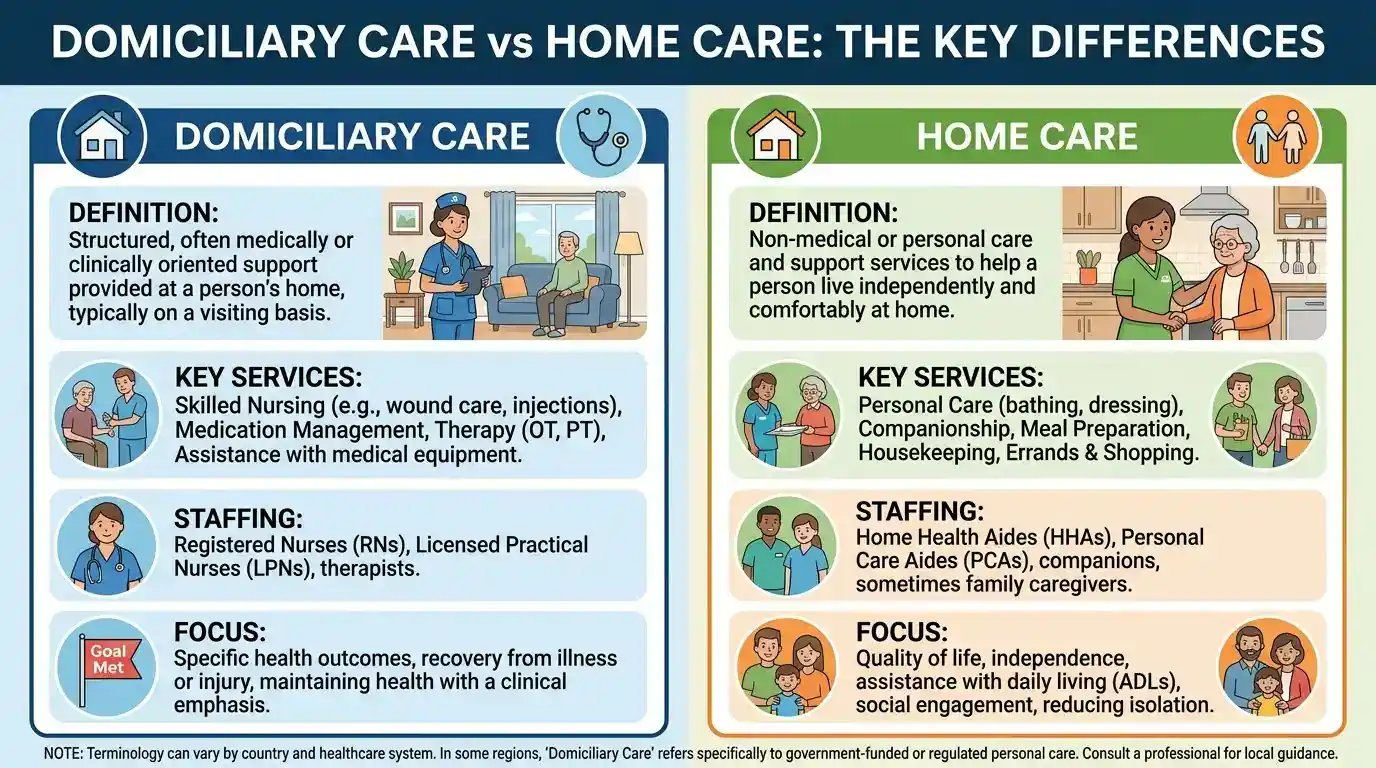
Domiciliary care tends to focus on personal, non-medical support with daily tasks. It usually covers basic household help, centres on personal assistance, and is a cost-effective alternative to residential care, delivered by trained care workers.
Home care often includes more medical support — such as managing medication — alongside a wider range of household and specialist services. Because it can include clinical care, it may cost more, and is delivered by appropriately qualified staff.
In practice, the two overlap a great deal, and the right choice depends on whether the main need is personal support, medical support, or a mix of both. If full-time, live-in support is what you’re weighing up, our live-in care page and our guide to the role of live-in caregivers will help.
Not sure which fits your family? Call +44 333 004 0106 or book a free care assessment and we’ll help you decide.
How much does care at home cost?
Cost is one of the first questions families ask, and it’s a fair one. The honest answer is that it depends on how many hours of support are needed, how complex the care is, and whether it’s daytime visits or around-the-clock support. Visiting domiciliary care is usually charged by the hour or visit, while more intensive support — including live-in care — is typically arranged on a weekly basis.
It’s also worth knowing that financial help may be available. Depending on circumstances, support can come from a local authority needs assessment, NHS Continuing Healthcare funding, or direct payments. The best first step is always a free, no-obligation assessment, where a provider can explain the likely cost for your specific situation. To talk through costs for your family, call +44 333 004 0106 or book a free care assessment.
How to choose the right option for your family
Rather than getting stuck on which label applies, it usually helps to ask a few practical questions:
- What does the person actually need help with? If it’s mainly washing, dressing, meals and company, domiciliary care is likely the right fit. If there are health needs or a condition like dementia, broader home care may suit better.
- How often is help needed? A couple of short visits a day, or continuous support? This shapes both the type of care and the cost.
- Is the need likely to change? Conditions like dementia progress over time, so it helps to choose a provider who can adjust the plan and increase support as needs change — without the upheaval of switching providers.
- Does the person want to stay at home? For most people, the answer is a clear yes — and both domiciliary and home care are designed to make that possible safely.
If full-time, live-in support is something you’re weighing up, our live-in care page and our guide to the role of a live-in carer explain how round-the-clock care works.
Frequently asked questions
Is domiciliary care the same as home care? They overlap so much that the terms are often used interchangeably. The simplest way to think about it: domiciliary care is a type of home care focused on personal, daily-living support, while “home care” is the broader term that can also include health-related and specialist care.
Which is cheaper, domiciliary care or home care? Domiciliary care is often the more cost-effective option because it focuses on personal support rather than specialist or health-related care. The actual cost depends on the number of hours and the complexity of the care needed.
Can care at home be increased as someone’s needs change? Yes. A good provider regularly reviews the care plan and can increase visits or move towards live-in support as needs change — which is one of the main advantages of staying at home rather than moving into residential care.
Do I need a referral to arrange care at home? No. You can contact a private provider directly and arrange a free assessment. If you’re seeking local authority funding, you’d start with a needs assessment from your council.
How do I get started? The easiest first step is a free, no-obligation care assessment. A member of the team visits, understands the person’s needs, and explains the options and likely cost — with no pressure to commit.