

For many families, it’s the nights that bring the most worry. During the day, an elderly parent might manage reasonably well, but once darkness falls, the risks change. A fall on the way to the bathroom, confusion in the small hours, missed medication, or simply the fear of being alone can turn night-time into the hardest part of the day. This is where overnight care for elderly loved ones can make a real difference.
If you’ve started wondering whether your parent or relative needs support through the night, this guide will help. We’ll explain what overnight care involves, the signs it might be needed, the types available, and how to choose the right option for your family, all in plain, honest language.
What is overnight care for the elderly?
Overnight care for the elderly means a trained carer stays with your loved one through the night, in their own home, to keep them safe and provide support and reassurance. Rather than moving into residential care, your loved one stays in familiar surroundings, with dedicated help during the hours they’re most vulnerable.
Depending on the level of need, an overnight carer might help with getting to the bathroom, taking medication, turning or repositioning in bed, settling anxiety, or responding quickly if something goes wrong. For some families it’s about hands-on care; for others, it’s simply the comfort of knowing someone caring is there.
Signs your elderly loved one may need overnight care
It isn’t always obvious when night-time support becomes necessary. These are some of the common signs that suggest it might be time to consider overnight care for an elderly loved one:
- Falls or near-falls at night, especially on the way to the bathroom
- Getting up and wandering, particularly with dementia or confusion
- Increased confusion or anxiety after dark (sometimes called “sundowning”)
- Difficulty with toileting or continence during the night
- Needing medication at night-time or in the early hours
- Poor or broken sleep that leaves them exhausted and unsafe
- Recent illness, surgery or a hospital discharge that needs monitoring
- Fear or loneliness at night that affects their wellbeing
- You, as the family carer, are exhausted from being “on call” every night (if this is you, you can ask your local council for a free carer’s assessment through the NHS)
If several of these feel familiar, it’s worth having a conversation about overnight support, both for your loved one’s safety and for your own wellbeing.
The different types of overnight care
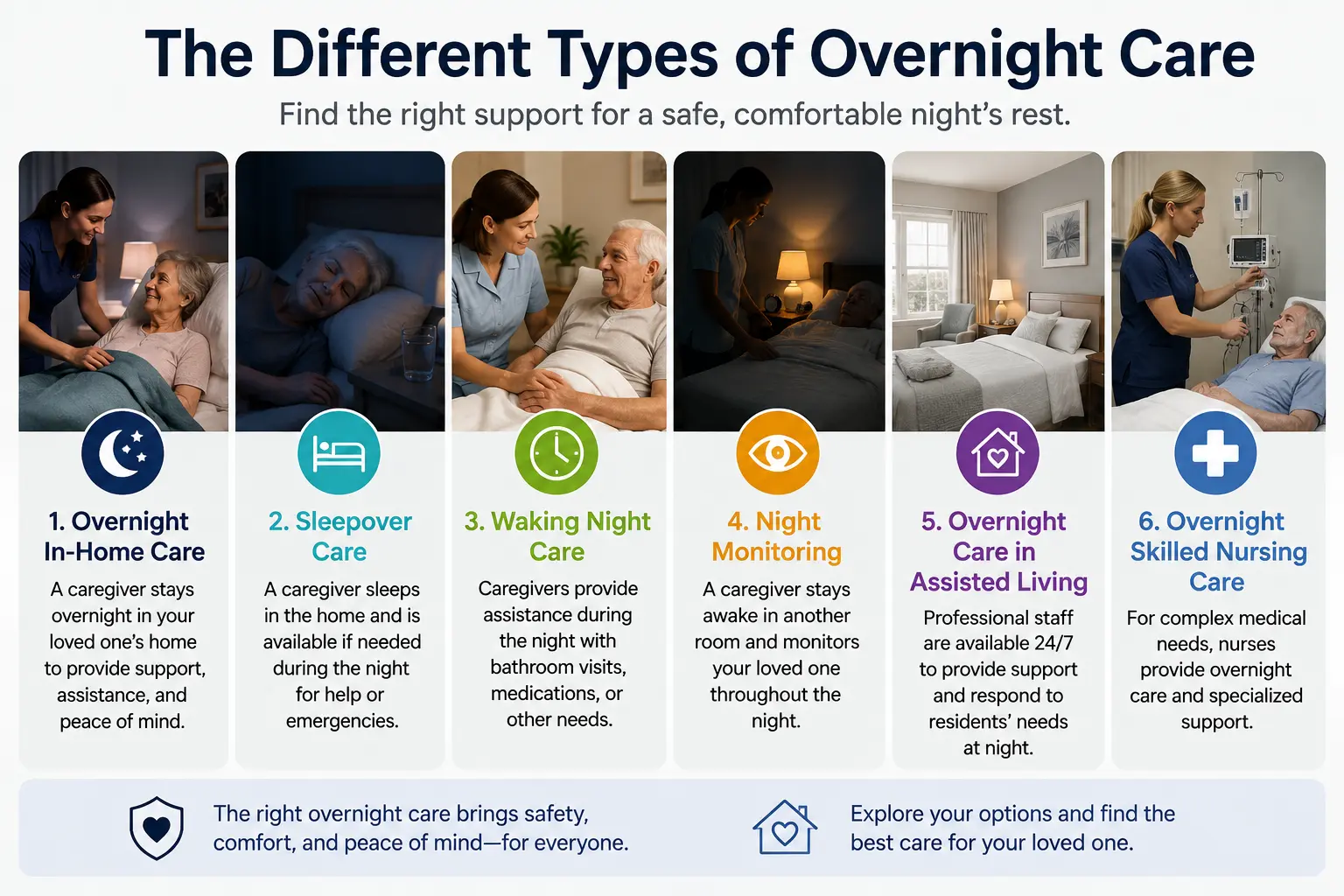
Overnight care isn’t one-size-fits-all. There are a few different types, and the right one depends on how much help your loved one needs during the night.
Sleeping night care. The carer stays overnight and sleeps in the home, ready to get up and help if needed. This suits someone who is mostly settled but shouldn’t be entirely alone, perhaps needing occasional help to the bathroom or reassurance.
Waking night care. The carer stays awake and alert throughout the night, providing continuous support. This is right for someone with more complex needs, frequent night-time waking, or a higher risk of emergencies.
Overnight sitting service. More about companionship and gentle supervision, this offers comfort and a reassuring presence for someone who feels anxious, lonely or unsettled at night.
Understanding the difference matters, because it affects both the care your loved one receives and the cost. If you’re unsure which fits, a good care provider will help you work it out.
The benefits of overnight care at home
Choosing overnight care at home, rather than a residential setting, brings real advantages for elderly people and their families:
- Familiar surroundings. Your loved one stays in their own home, with their own bed, routine and comforts, which is especially important for people living with dementia.
- One-to-one attention. Unlike a care home, where staff are shared among many residents, an overnight carer is there for one person.
- Independence and dignity. Your loved one keeps control of their own life and space.
- Peace of mind for the family. You can finally sleep, knowing someone caring and capable is watching over your parent. (Organisations like Carers UK offer further support and advice for family carers.)
- Flexibility. Overnight care can be occasional, regular, or combined with daytime support as needs change.
Overnight care vs moving into a care home
When an elderly person starts struggling at night, families often assume a care home is the only answer. But it isn’t. For many, overnight care at home is a gentler, more personal alternative.
A care home means leaving behind a familiar home, routine and community, which can be deeply unsettling, particularly for someone with dementia. Overnight care lets your loved one stay exactly where they feel safest, while still getting the night-time support they need. It’s often the difference between a loved one feeling “moved out” and simply feeling looked after.
For families needing round-the-clock rather than only night-time support, live-in care can provide continuous help day and night at home, which is worth exploring as an alternative to residential care.
How to choose overnight care for an elderly parent
Once you’ve decided overnight care might help, choosing the right provider matters enormously. A few things worth checking:
- Is the provider CQC regulated? This is the mark of a safe, properly monitored care provider in England.
- Are the carers DBS checked and trained? Always confirm carers are fully vetted and experienced.
- Do they offer the type of night care you need? Check they provide sleeping, waking or sitting care as appropriate.
- Will your loved one be matched to a suitable carer? Consistency and a good personality match make a real difference.
- Is the pricing clear? Look for honest, transparent costs with no hidden extras.
- Do they start with a proper assessment? A good provider will always assess your loved one’s needs before agreeing care.
Trust your instincts too. The right provider should leave you feeling reassured, not pressured. For independent, general guidance on care options for older people, Age UK is a helpful starting point.
FAQ’s About Overnight Care for Elderly
What does overnight care for the elderly involve?
Overnight care involves a trained carer staying with your elderly loved one at home through the night. They can help with toileting, medication, mobility, repositioning and reassurance, or simply provide a safe, comforting presence, depending on your loved one’s needs.
What is the difference between sleeping and waking night care?
With sleeping night care, the carer sleeps in the home and helps when called. With waking night care, the carer stays awake all night to provide continuous support. The right choice depends on how much help your loved one needs during the night.
How do I know if my elderly parent needs overnight care?
Common signs include falls at night, getting up and wandering, confusion or anxiety after dark, needing help with toileting or medication overnight, and recovering from illness. If you’re exhausted from being on call every night, that’s also a sign it may be time for support.
Is overnight care better than a care home?
For many families, yes. Overnight care lets your loved one stay in familiar surroundings with one-to-one attention, rather than moving into a shared residential setting. It preserves their independence, routine and comfort while keeping them safe at night.
How much does overnight care for the elderly cost?
The cost depends on whether sleeping or waking night care is needed, the complexity of support and your location. A good provider will give you a clear, personalised quote, and financial help may be available through your local authority, NHS Continuing Healthcare or Attendance Allowance.
Thinking about overnight care for your loved one?
If the nights have become a source of worry, you don’t have to manage alone. Overnight care for elderly loved ones offers a safe, compassionate way to keep your parent comfortable at home, while giving your whole family peace of mind.
At Black Horse Care, we provide trusted overnight care across Barking, Greater London and Essex, with warm, DBS checked carers matched to your loved one’s needs. For round-the-clock support, our live-in care service is also available. Call us on +44 333 004 0106 or book a free care assessment to talk through what would suit your family.
Black Horse Care — your happiness is our goal.