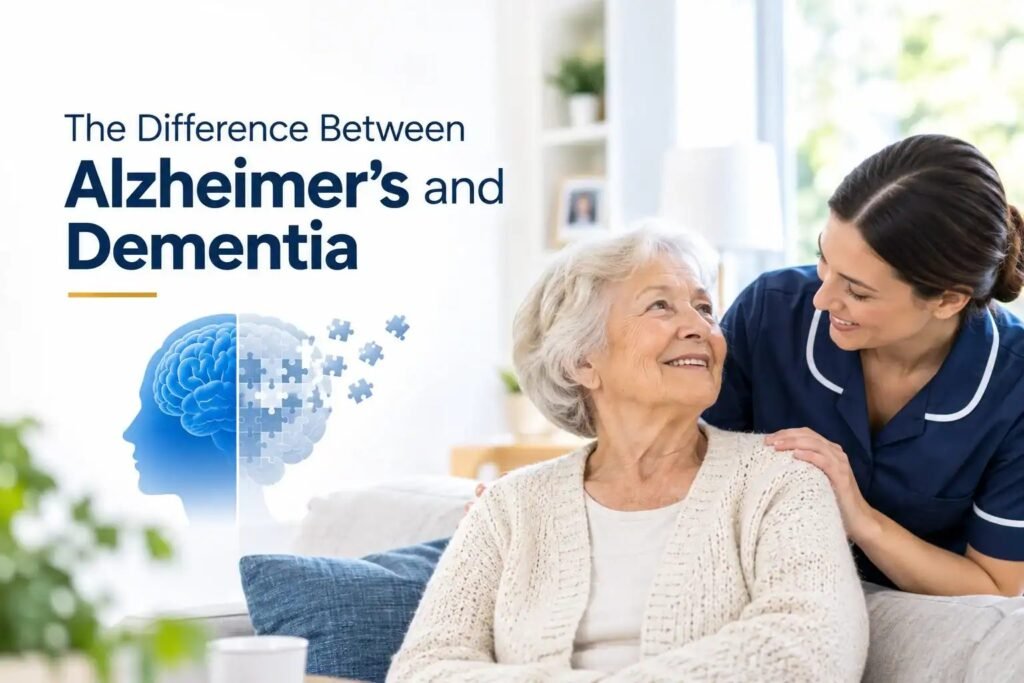
If someone you love has been given a diagnosis, you’ve probably found yourself wondering about the difference between Alzheimer’s and dementia. The two words are often used as if they mean the same thing, which understandably causes a lot of confusion. They’re related, but they’re not the same, and understanding the difference can help you make sense of what’s happening and what comes next.
This guide explains it in plain, everyday language, no medical jargon, just clear answers for families trying to understand a difficult diagnosis.
The simple answer
Here’s the difference in one sentence: dementia is a general term for a decline in brain function, and Alzheimer’s disease is the most common cause of it.
Think of it like this. “Dementia” is a bit like the word “headache”, it describes a set of symptoms. Alzheimer’s is one specific cause of those symptoms, just as there are different causes of a headache. So a person doesn’t have “dementia or Alzheimer’s”, they usually have dementia caused by Alzheimer’s disease.
What is dementia?
Dementia is an umbrella term for a group of symptoms linked to an ongoing decline in the brain. It affects memory, thinking, language, understanding and judgement, and it gradually makes everyday life harder.
Dementia isn’t a normal part of ageing. It’s caused by diseases that damage the brain, and there are several of them. The symptoms depend on which part of the brain is affected and which disease is causing it, but common signs include:
- Memory loss, especially of recent events
- Difficulty finding the right words
- Problems with planning or concentration
- Confusion about time or place
- Changes in mood or behaviour
What is Alzheimer’s disease?
Alzheimer’s disease is a specific physical disease that damages the brain over time. It’s the most common cause of dementia, accounting for the majority of cases.
In Alzheimer’s, abnormal proteins build up in the brain, forming structures that damage and eventually destroy brain cells. This usually begins in the area of the brain responsible for memory, which is why one of the earliest signs is often difficulty remembering recent conversations or events. As it progresses, it affects more of the brain and more abilities.
So what’s the actual Difference Between Alzheimer’s and Dementia?
To put it simply:
- Dementia is the set of symptoms (memory loss, confusion, difficulty thinking).
- Alzheimer’s is one of the diseases that causes those symptoms, the most common one.
A person can have dementia caused by Alzheimer’s, or dementia caused by something else entirely. That’s why doctors try to identify the specific cause, because it affects how the condition may progress and how best to support the person.

Other common types of dementia
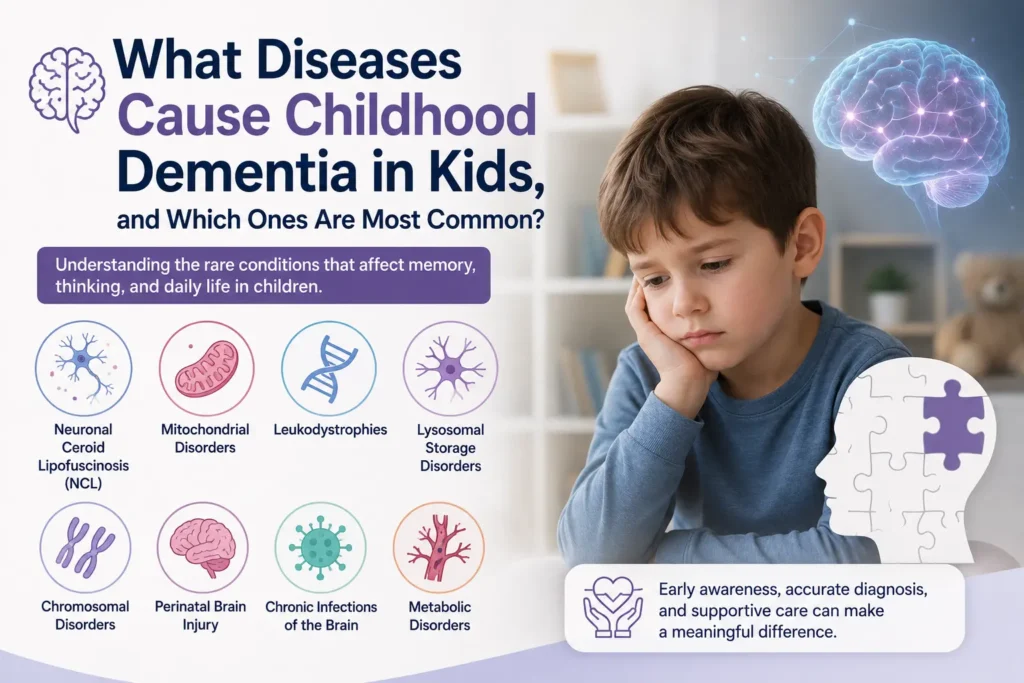
Alzheimer’s is the most common cause, but not the only one. Other types include:
- Vascular dementia, caused by reduced blood flow to the brain, often after a stroke or a series of small strokes.
- Lewy body dementia, linked to tiny protein deposits in the brain, which can also cause movement problems and visual hallucinations.
- Frontotemporal dementia, which tends to affect younger people and often changes personality and behaviour before memory.
Some people have more than one type at the same time, known as mixed dementia.
Why the difference matters
Understanding the specific cause matters because different types of dementia can progress differently and may respond to different support and treatments. A clear diagnosis helps families understand what to expect, plan ahead, and access the right help.
It can also bring a small measure of relief. Knowing what you’re dealing with, rather than facing an unknown, often makes it a little easier to move forward.
Supporting a loved one with dementia or Alzheimer’s
Whatever the specific diagnosis, the day-to-day reality for families is similar: your loved one needs patience, understanding and the right support, ideally in surroundings that feel safe and familiar.
Staying at home can be especially valuable for someone with dementia, because familiar surroundings, routines and faces help reduce confusion and anxiety. With the right support, many people with dementia continue to live well at home for a long time.
At Black Horse Care, our carers are trained to support people living with dementia and Alzheimer’s with kindness, routine and reassurance. You can learn more on our dementia care page.
Frequently asked questions
Is Alzheimer’s the same as dementia?
No. Dementia is a general term for symptoms like memory loss and confusion, while Alzheimer’s is a specific disease that causes those symptoms. Alzheimer’s is the most common cause of dementia, but not the only one.
Is Alzheimer’s a type of dementia?
Alzheimer’s is a disease that causes dementia. It’s the most common cause, so people often refer to “Alzheimer’s dementia”, meaning dementia caused by Alzheimer’s disease.
Can you have dementia without Alzheimer’s?
Yes. Dementia can be caused by several different diseases, including vascular dementia, Lewy body dementia and frontotemporal dementia. Alzheimer’s is just the most common cause.
What are the early signs of Alzheimer’s?
Early signs often include difficulty remembering recent events or conversations, struggling to find the right words, and problems with planning or concentration. If you notice these in a loved one, it’s worth speaking to their GP.
How is dementia diagnosed?
A GP will usually carry out an initial assessment and may refer your loved one to a specialist for memory tests, scans and further checks to identify the type and cause of dementia.
We’re here to help
A dementia or Alzheimer’s diagnosis is frightening, but you don’t have to face it alone. Understanding the difference is a first step, and knowing there’s compassionate support available is the next.
At Black Horse Care, we provide warm, specialist dementia care at home across Barking, Greater London and Essex. Call us on +44 333 004 0106 or book a free care assessment to talk through how we can help your family.
Black Horse Care — your happiness is our goal.