
When families think about care for an older relative, the conversation usually starts with practical things — help with washing, dressing, medication and meals. These matter enormously. But there’s another part of care that’s just as important to a person’s health and happiness, and it’s one that’s far too easily overlooked: companionship.
For many older people, loneliness is a daily reality. And it isn’t simply a matter of feeling sad — prolonged loneliness is now understood to be a genuine risk to physical and mental health. This is why companionship sits at the very heart of good live-in care, and why the relationship between a person and their carer matters so much.
Why loneliness is more than a feeling
It’s easy to underestimate loneliness, but research over the past two decades has shown it has a real, measurable effect on health. Older people who are socially isolated face a higher risk of depression and anxiety, cognitive decline, and even physical health problems. Living alone with little daily contact can quietly erode someone’s confidence, appetite, sleep and motivation.
The reasons older people become isolated are often gradual and hard to see from the outside. Friends and partners pass away. Mobility problems make it harder to get out. Driving stops. Hearing or sight declines, making conversation tiring. Family live further away or are busy with their own lives. Bit by bit, a person’s world can shrink — until days pass with little meaningful human contact.
This is the gap that companionship in care is designed to fill. And in live-in care, where a trained carer shares the person’s home, that companionship is constant rather than occasional.
What companionship means in live-in care
Companionship in live-in care goes far beyond simply being in the same house. It means a genuine, friendly relationship — a familiar person to talk to, share meals with, enjoy a cup of tea and a chat with, and feel at ease around.
It’s the difference between someone being cared for and someone being cared about. A live-in carer who provides good companionship pays attention to the person as an individual: their stories, their interests, their moods, the things that matter to them. That steady, attentive presence brings emotional support and stability that has a real, positive effect on health and happiness.
Importantly, companionship isn’t a separate “service” bolted on to practical care — it’s woven through everything a live-in carer does. Helping someone get dressed becomes a chance to chat. Preparing a meal becomes a shared activity. A walk to the shops becomes an outing rather than a chore. This is one of the quiet strengths of live-in care, and part of the wider role we describe in the role of a live-in carer.
How companionship improves wellbeing
The benefits of good companionship in care are wide-ranging and genuinely significant.
It lifts mood and eases anxiety. Regular, friendly contact reduces feelings of isolation and helps people feel more positive, settled and secure. Knowing someone is there — and someone who knows you — is deeply reassuring.
It keeps the mind active. Conversation, shared activities and gentle mental stimulation help keep the mind engaged. For people living with conditions like dementia, familiar company and routine can be especially comforting and grounding.
It encourages activity and appetite. People are far more likely to eat well, stay active and keep up hobbies when they’re doing so alongside someone. A carer who shares mealtimes and activities gently encourages healthier daily habits.
It catches problems early. A carer who knows someone well notices the small changes — a quieter mood, a lost appetite, a new ache, a bit more confusion than usual — that an occasional visitor would miss. That early awareness can make a real difference to health.
It builds trust. Perhaps most importantly of all, companionship builds a relationship of trust. And trust is the foundation that makes every other part of care easier — personal care feels less daunting, medical support is more readily accepted, and difficult moments are handled with patience and understanding.
Companionship and physical health
It might seem surprising that company can affect physical health, but the link is well established. People who feel connected and supported tend to sleep better, eat better and stay more active — all of which support physical wellbeing. They’re also less likely to experience the stress and low mood that can worsen existing health conditions.
For older people recovering from illness or surgery, encouragement and company can genuinely aid recovery: someone to motivate gentle exercise, to ensure meals are eaten, and to provide the emotional lift that helps people get back on their feet. Companionship, in other words, isn’t a “nice extra” — it’s part of what keeps people well.
Why live-in care is especially good for companionship
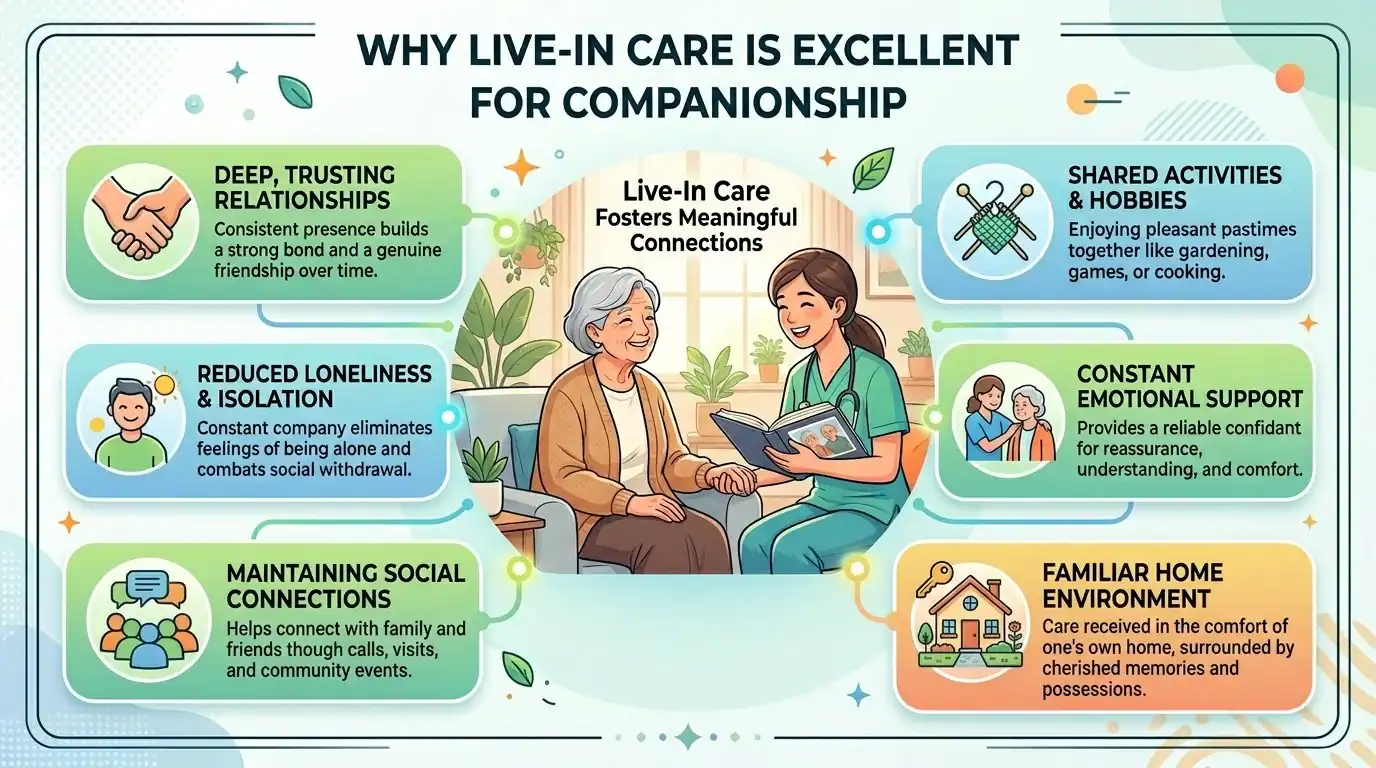
Visiting care provides valuable support, but by its nature it comes in short bursts — a carer arrives, helps with specific tasks, and moves on to the next person. Live-in care is different. Because the carer shares the home, companionship is woven naturally through the whole day rather than squeezed into a half-hour visit.
This continuity matters. The person isn’t meeting a different carer each visit; they’re building a relationship with one familiar person who learns their preferences, remembers their stories, and becomes a trusted part of daily life. For someone who would otherwise spend long hours alone, that constant, friendly presence can transform their quality of life.
It’s also reassuring for families. Knowing that a relative isn’t sitting alone for hours — that there’s someone there to talk to, share meals with and keep an eye on them — brings enormous peace of mind. If you’d like to understand how this compares with visiting support, our guide to the difference between domiciliary care and home care is a helpful read.
How a good carer builds genuine companionship
Real companionship can’t be forced — it grows from the right approach. A skilled live-in carer builds it by:
- Listening properly. Taking time to learn about the person’s life, family, interests and preferences — and remembering them.
- Respecting independence. Encouraging the person to do what they can, and offering company and support rather than taking over.
- Sharing activities. Cooking together, watching favourite programmes, doing puzzles, gardening, looking through photographs, or simply chatting over tea.
- Encouraging connection. Helping the person stay in touch with family and friends, attend clubs or church, and keep up the social ties that matter to them.
- Being patient and kind. Especially on harder days, meeting the person with warmth, reassurance and good humour.
This is exactly the kind of relationship we aim to build for every person in our care.
Frequently asked questions
Is companionship really part of professional care? Yes. Good care recognises that emotional wellbeing is just as important as physical health. Companionship isn’t an optional extra — it’s woven through everything a live-in carer does, from mealtimes to outings to everyday conversation.
Can companionship really affect health? Yes. Loneliness and social isolation are linked to higher risks of depression, anxiety and physical decline in older people. Regular, meaningful company supports better mood, sleep, appetite and overall wellbeing.
How is companionship different in live-in care compared with visiting care? Visiting care provides support in short visits, while live-in care means a carer shares the home and provides constant, familiar company throughout the day. This continuity builds a deeper relationship and is especially valuable for people who would otherwise spend long periods alone.
My relative is quite private — will a live-in carer feel intrusive? A good carer respects privacy and independence, offering company without taking over. With careful matching and a little time, most people come to value the relationship greatly. Compatibility is something we pay close attention to when matching carers.
How do I arrange companionship-focused care for a loved one? The first step is a free, no-obligation assessment. We’ll understand the person’s needs, personality and interests, and match them with a carer who’s a good fit — not just for their care needs, but as company.