From the very first smile a baby shares to the first friendship a toddler makes, children are learning how to connect with the world around them. This process socialization is one of the most important parts of growing up. The social skills a child builds in their earliest years shape their confidence, their relationships and their ability to handle whatever life brings later on.
For parents and carers, understanding why socialization matters and how to nurture it is one of the best ways to give a child a strong, happy start. Here’s what socialization really means, why early childhood is the ideal time for it, and the lasting benefits it brings.
What is socialization?
Socialization is simply the way we learn to connect and interact with the people around us. It’s how children learn to take part in group activities, communicate with others, and build good relationships at home, in their community, and later at nursery or school.
For a young child, socialization is everything from learning to share a toy and take turns, to reading other people’s feelings and making their first friends. It’s a skill, and like any skill, it grows stronger with practice and gentle encouragement.
Where socialization begins: the family
A child’s first and most important social classroom is their own family. Long before they meet other children, little ones are watching and learning from the people closest to them especially their parents.
Children are remarkable observers. They notice how the adults around them speak, listen, show kindness, handle frustration and treat other people. This is where their social training quietly begins: in everyday moments at home. The warmth, patience and good manners a child sees modelled by their family become the foundation for how they’ll interact with the wider world.
That’s also why a caring, attentive environment matters so much in these early years whether that’s family, or trusted in-home childcare that supports a child’s social and emotional growth alongside parents.
Why early childhood is the right time
There’s a reason “the early years” get so much attention from experts: a child’s brain develops faster between birth and age five than at any other time in life. The social habits and skills children build in this window communication, empathy, confidence tend to stick, shaping the kind of person they become.
Teaching social skills early gives children a genuine head start. A child who learns to communicate, share and connect in their first years carries those abilities into school, friendships and, eventually, adult life. Socialization isn’t just about being sociable now; it’s an investment in the whole person a child will grow into.
The benefits of socialization in early childhood
When children are given plenty of warm, positive social experiences, the benefits reach into every part of their development. Here are five of the most important.
1. Stronger communication skills
Socializing is how children learn to express themselves and understand others. Through conversations with family, friends and carers, they pick up new words, learn to listen, and discover how to share their thoughts and feelings. These early exchanges build the language and communication skills that lead to meaningful conversations and connections throughout life.
2. Friendships and belonging
Early social experiences lay the foundation for every relationship that follows. As children play and talk with others their own age, they learn to form bonds, share, show empathy and work together. Making those first friendships teaches children that they belong and that sense of connection boosts their confidence and happiness enormously.
3. Emotional development
Through play and interaction, children begin to understand other people’s feelings and to manage their own. Learning to recognise emotions, take turns and cope with small disappointments builds emotional intelligence the ability to stay calm, kind and steady when life gets tricky. It’s one of the most valuable life skills a child can develop, and it starts young.
4. Greater self-confidence
Positive social experiences help children believe in themselves. As they express their ideas, join in group activities and feel heard, their self-esteem grows. A child who learns early that their voice matters is far less likely to struggle with shyness or self-doubt as they get older they grow into adults who communicate confidently and trust their own abilities.
5. Resilience for future challenges
Socializing gently introduces children to the give-and-take of real life sharing, compromising, handling disagreements and bouncing back. These experiences help them see the world through a wider lens and build the resilience they’ll need to navigate challenges in adulthood. A child who has learned to cooperate, wait their turn and recover from small setbacks grows into an adult who can handle pressure, work well with others and adapt to change. In short, good social skills don’t just help a child make friends today; they prepare them to handle whatever life brings tomorrow.
Signs your child’s social skills are developing well
It can be reassuring to know what healthy social development looks like. While every child grows at their own pace, you might notice your little one starting to share toys (even if reluctantly at first), showing interest in other children, copying the actions and words of those around them, comforting someone who’s upset, taking turns in simple games, and using words or gestures to express what they want. These small milestones are signs that your child is building the social foundations that will serve them for life. If you ever have concerns about your child’s development, your health visitor or GP is always a good first port of call early support, where needed, makes a real difference.
Balancing socialization and screen time
In today’s world, screens are part of childhood but real social skills are built through real interaction. Face-to-face play teaches children things a screen never can: reading body language, taking turns, resolving little conflicts and sharing genuine laughter. That doesn’t mean screens are the enemy; it means balance matters. Aim to keep plenty of time each day for hands-on play, conversation and time with other people, and use screen time thoughtfully rather than as the default. The richest learning for a young child almost always happens in the company of others.
How parents and carers can support socialization
The good news is that supporting your child’s social development doesn’t require anything complicated just everyday warmth and a few simple habits:
- Model good interaction. Children copy what they see, so let them watch you listen, share and treat others kindly.
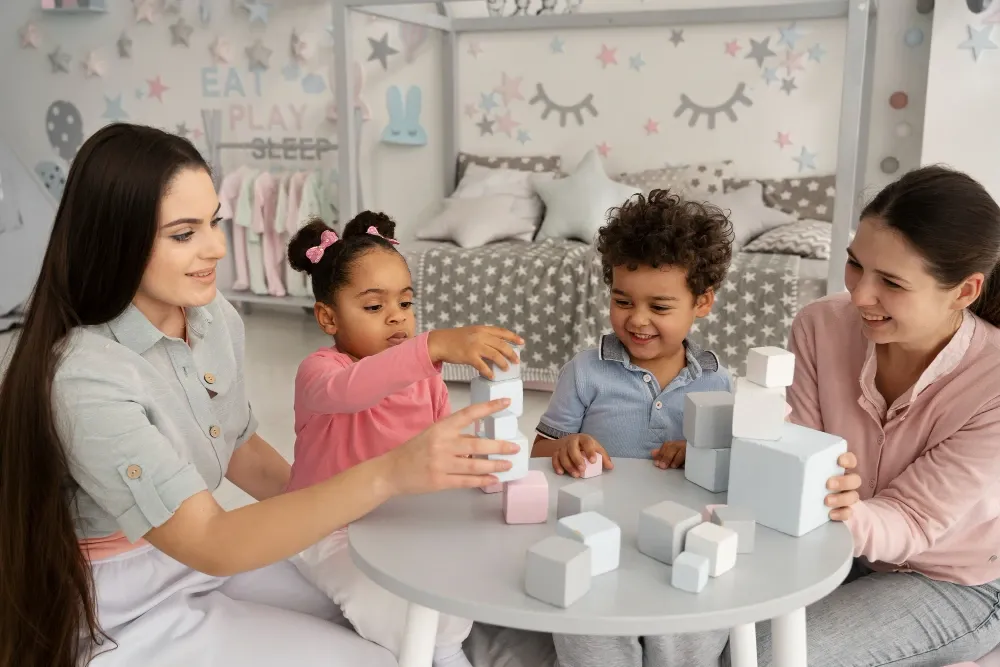
- Make time for play with others. Playdates, family gatherings, toddler groups and time with other children all give valuable practice.
- Talk, read and listen together. Conversation and stories build language and empathy at the same time.
- Encourage sharing and turn-taking. Gentle guidance during play teaches cooperation.
- Praise effort, not just success. Celebrating when a child shares or comforts a friend reinforces the behaviour.
- Provide a warm, secure environment. Children explore and socialise best when they feel safe and supported at home or with a trusted carer.
For families balancing work and parenting, consistent, nurturing care makes a real difference to a child’s social growth. Our in-home childcare supports children’s development in familiar, comfortable surroundings and you can read more about safe, happy environments in our guide to childcare safety tips every parent should know.
Frequently asked questions
What does socialization mean in early childhood?
Socialization in early childhood is how young children learn to connect and interact with others sharing, communicating, making friends and understanding feelings. It begins at home with the family and grows through play and time with other children.
Why is socialization important for child development?
It builds the communication skills, emotional intelligence, confidence and friendships that shape a child’s whole future. Children who develop strong social skills early tend to do better at school, in relationships and in adult life.
At what age should socialization start?
It starts from birth, through everyday interaction with family. As children grow, time with other children through play, groups or childcare becomes increasingly valuable, especially in the first five years when development is fastest.
How can I help my shy child socialize?
Go at their pace, model friendly interaction, arrange small, low-pressure play opportunities, and praise their efforts warmly. A secure, supportive environment helps shy children gain confidence gradually never force it.
Can childcare help with my child’s social development?
Yes. Good childcare gives children regular, positive social experiences and gentle encouragement to communicate, share and play supporting their development alongside what they learn at home.
Talk to Black Horse Care
Every child deserves a warm, encouraging start that helps them grow in confidence and connection. If you’re looking for nurturing in-home childcare across Barking, East London and Essex, we’d love to help. Call +44 333 004 0106 or book a free consultation to talk through your family’s needs.